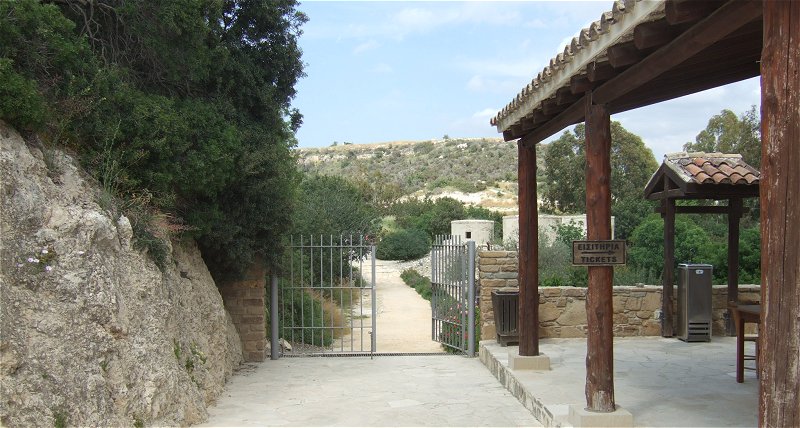
Day 6, Locality 7
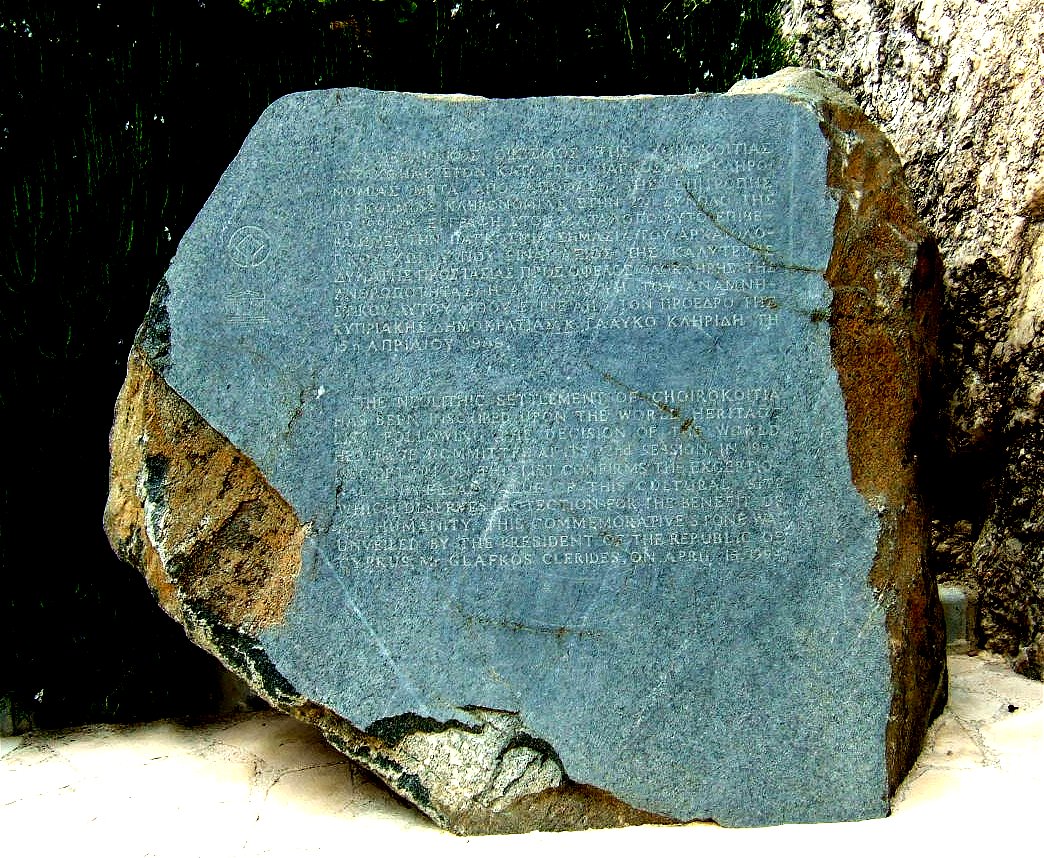
7) Choirokitia Neolithic Village; ancient site visit.
This village, dated from around 6800 BC, is the oldest site of communal habitation on Cyprus. It is not known from where the settlers arrived, and there is no earlier history recorded other than the brief appearance of habitation around 10,000 BC. Then, at around 7000 BC, the remains of communal habitation are found at several sites on Cyprus. The initial dwellers at Choirokitia were farmers and hunters of the aceramic Neolithic Civilisation, carving and fashioning implements from stone. Many dwellings are represented at this site, and a major form of ongoing development seems to have been the continual rebuilding on the same site, at a higher floor level. The site seems to have been abandoned at around 5200 BC.
Although geological study of Pleistocene cave sites goes back to the nineteenth century, a new paradigm was set in train during the 1920s, when G. Caton-Thompson and E.W. Gardner established a sequence of prehistoric occupations linked to the changing spatial and ecological contours of fluctuating lakes in Egypt's Faiyum Depression. Subsequent collaborations have carried research beyond geochronology and climate stratigraphy to address human settlement within changing environments, which served both as resource and artifact.
Geoarchaeologists, as they were eventually called, worked at multiple scales and with new skills, exploring new ground such as cultural sediments and the taphonomy of site formation, preservation, and destruction. Others, especially in the UK, investigated human modification of particular watersheds. Forty years of work on Mediterranean soil erosion issues saw researchers continue to wrestle with climate or destructive land use as possible prime movers in ecological degradation. The number of geoarchaeologists, full or part time, has increased by an order of magnitude, and the literature continues to explode in quantity and diversity. Perhaps the overarching conceptual framework for most remains a deep interest in landscape histories and the ways in which they co-evolve with human societies.


